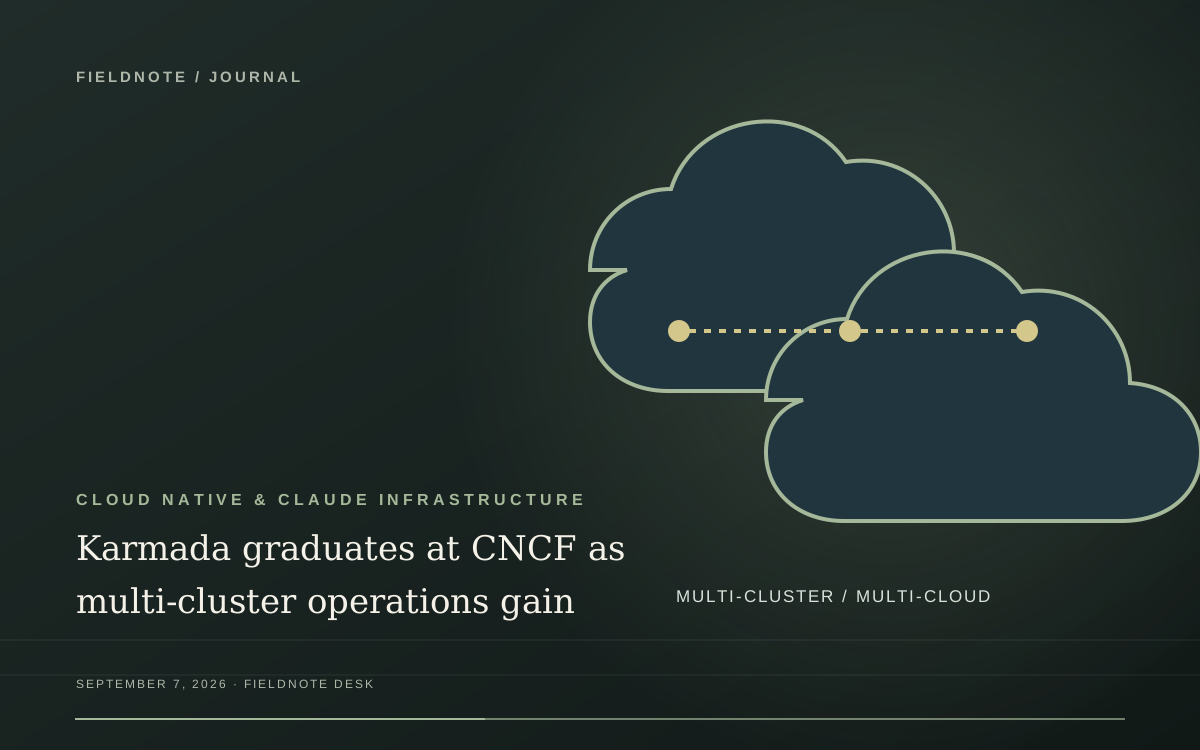
The Cloud Native Computing Foundation announced Karmada’s graduation on September 7. Karmada is a Kubernetes-native orchestration project designed to manage applications across multiple clusters and environments. Graduation is the CNCF’s recognition of the project’s maturity and community progress.
Multi-cluster management is becoming more relevant as organizations spread workloads across regions, providers and specialized infrastructure. A shared orchestration layer can help, but teams still need to reason about network boundaries, policy consistency, failure handling and who is responsible when a deployment spans several control planes.
What graduation signals
CNCF graduation indicates a project has met the foundation’s maturity criteria, including sustained adoption and community governance. It is a meaningful ecosystem milestone, but it does not automatically make a project the right fit for every platform or remove the work of operating it safely.
The multi-cluster tradeoff
More clusters can improve resilience and meet location requirements, but they add operational complexity. Karmada’s continued adoption will depend on how well it handles placement, policy and lifecycle management in the varied environments operators actually run.