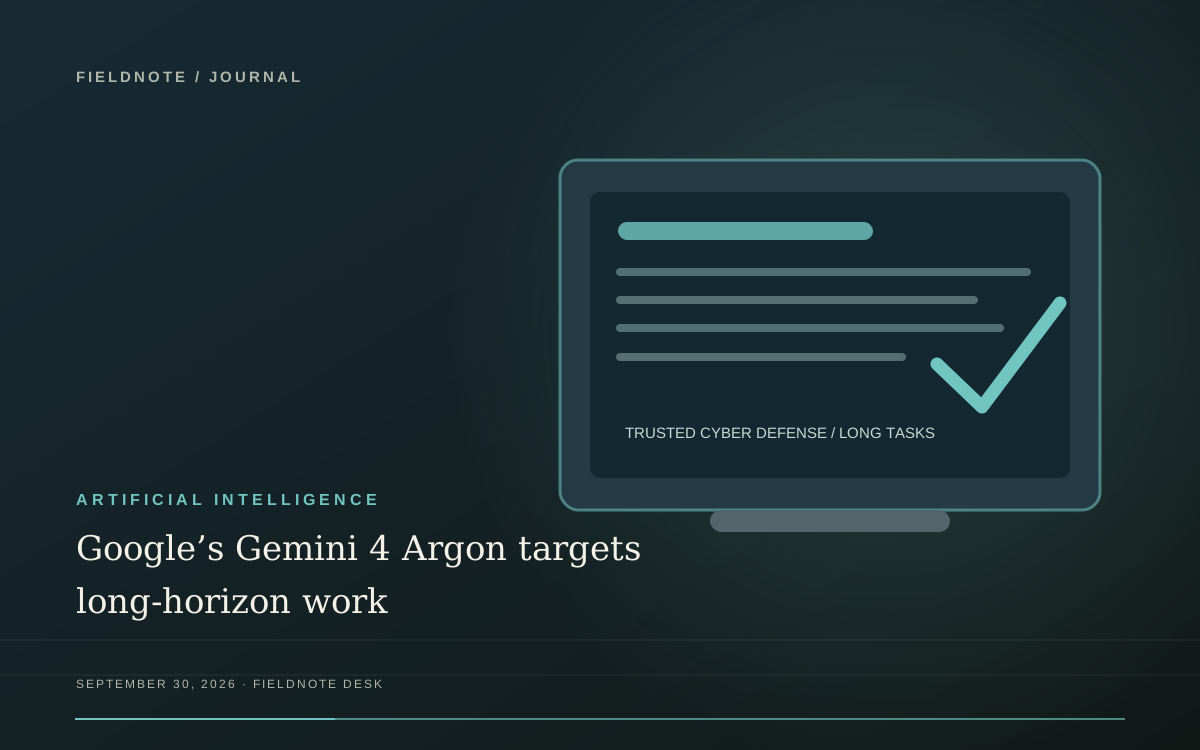
Google announced Gemini 4 Argon on September 30, describing it as a frontier model for complex, long-running work across software engineering, enterprise knowledge tasks and cybersecurity defense. The initial release is limited to trusted cyber defenders through the company’s Fairwind program while Google continues testing safeguards.
The headline technical change is a one-million-token output limit, which Google says is intended to support much longer reasoning trajectories. The company also reports internal results across code migration, enterprise evaluations and vulnerability remediation; those performance claims are Google’s own and should be read as vendor-reported benchmarks.
Why the first release is restricted
Argon is not being launched as a general-purpose public model yet. Google says it is using a phased process, gathering feedback from early testers and strengthening safety measures before access expands to developers, enterprises and consumers. That makes the rollout itself part of the story: advanced cyber capability is being treated as a deployment question, not only a benchmark race.
What to watch next
The important follow-up will be independent evidence about reliability, security boundaries and the practical value of longer tasks. Google says paid API customers and Google AI Ultra subscribers are expected to be among the first broader groups when availability expands. Until then, Argon is best understood as a controlled early release rather than a generally available tool.