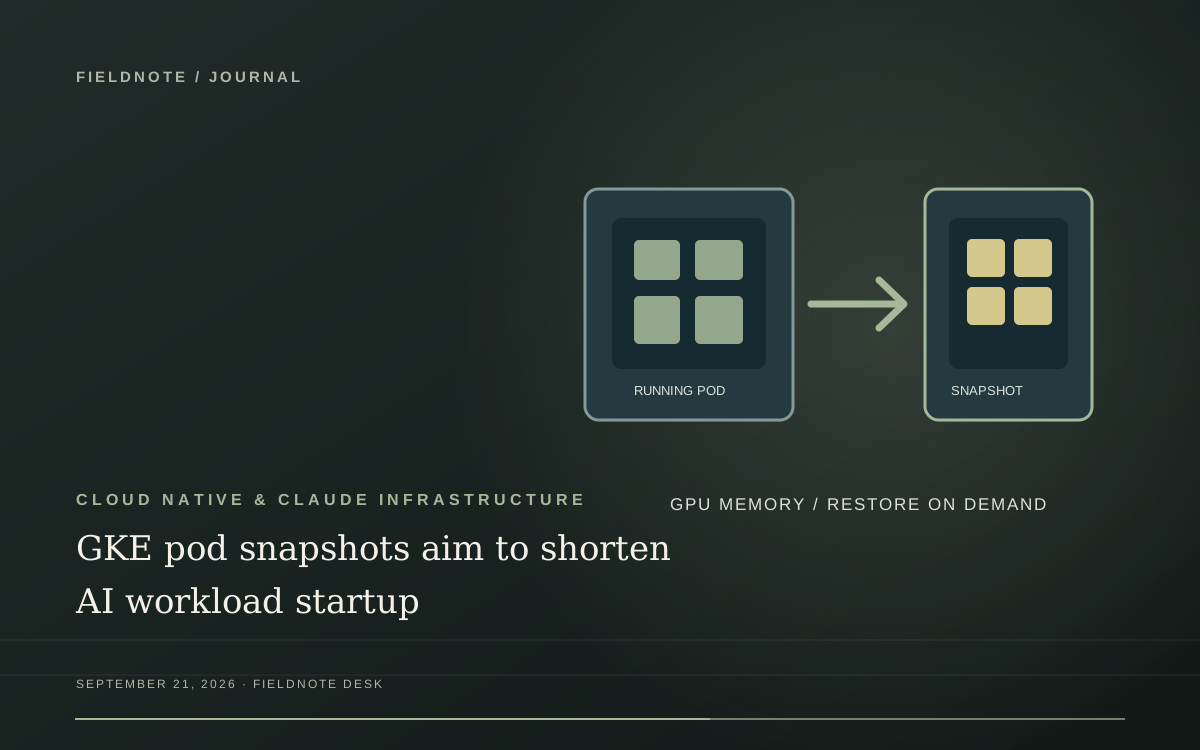
Google Cloud announced pod snapshots for GKE on September 21. The feature saves the state of a workload—including CPU and GPU memory—so a pod can be restored later. Google says its tests showed faster startup for AI inference workloads.
Restoring a warm workload could help applications that pay a noticeable initialization cost, such as loading large models or preparing GPU state. The tradeoff is that snapshots consume storage and introduce lifecycle questions: when to capture, how to validate and how to keep restored state secure and current.
Why startup time matters
For interactive AI services, startup overhead can contribute to slow responses when capacity scales from zero or a workload is rescheduled. Capturing useful state may reduce repeated initialization, but the benefit depends on the workload and the time needed to create and retrieve the snapshot.
Benchmark your own workload
Google’s performance claims come from its tests. Operators should measure restore time, snapshot size, GPU compatibility and failure recovery in their own environment before changing autoscaling or availability targets. Snapshot state should also be protected like other sensitive workload data.