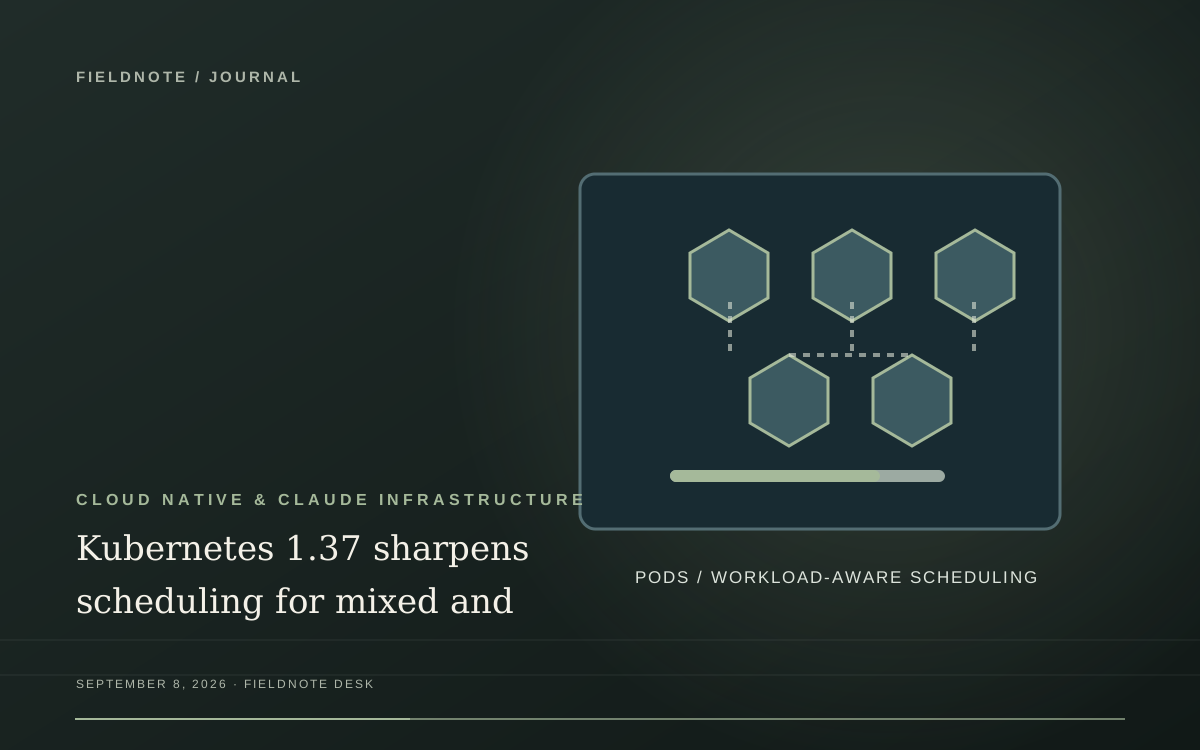
Kubernetes 1.37 brings a set of changes aimed at making resource management and workload placement more expressive. The release cycle includes beta pod-level resource management and workload-aware scheduling features, building on the project’s work to support more complex workloads such as batch jobs and AI tasks.
Scheduling is increasingly an infrastructure concern as clusters mix latency-sensitive services with compute-heavy jobs. Better signals can help a scheduler make more informed placement decisions, but operators still need to test behavior against their own capacity, fairness and reliability goals.
Why workload awareness matters
Traditional scheduling often works from individual pod requests and constraints. Workload-level context can make it easier to express how a group of jobs should be placed or coordinated. For GPU-bound training and inference, resource allocation and startup behavior can affect both utilization and cost.
A release is a starting point
Beta features may change before becoming stable and may require configuration or compatible components. Platform teams should review the official release notes, try changes in a representative environment and monitor the effect before expanding them to production clusters.